Lithium batteries
Printed From: myHanse.com
Category: Hints & Tips
Forum Name: 415/418
Forum Description: 415/418 Hints, Tips and News
URL: https://www.myhanse.com/forum_posts.asp?TID=11779
Printed Date: 27 March 2026 at 03:40
Software Version: Web Wiz Forums 12.06 - https://www.webwizforums.com
Topic: Lithium batteries
Posted By: Joey D
Subject: Lithium batteries
Date Posted: 29 January 2020 at 01:37
|
I am looking to replace my 2 AGMs with lithium batteries and flex solar panels on my Bimini Anyone have idea how to fit 2 300AH batteries in that space or other? Is one 300 enough?
|
Replies:
Posted By: Jooce
Date Posted: 29 January 2020 at 09:14
|
I fitted 2 x 100 AH LiFePo4 batteries in my H385, replacing 2 x 160Ah AGM batteries. I have been running for two seasons and I have never been close to out of power. The lithium battery can take so much more charge from the alternator compared with the AGM. I'd say that 300Ah is enough. It is comparable with 600Ah of AGM as you can discharge your LiFePO4 batteries down to around 10% ------------- KarmaDos- Hanse 385 - 2013 |
Posted By: S&J
Date Posted: 29 January 2020 at 12:49
|
Hi Jooce. What age were the AGM batteries when you replaced them? Mine are now 5 seasons old and I think they may be on their way out. What changes did you need to make to the charging systems? And finally can you recommend a brand / supplier? ------------- H458 #159 Primal Mediterranean cruising |
Posted By: Matt1
Date Posted: 29 January 2020 at 13:20
|
I had two lifeline AGM batteries on my last boat. Bought in 2005. After a few years I returned them to Merlin in Poole as they appeared to be losing charge. They ran an aggressive test on them. Can't remember the name, but I think it involved charging them then aggressively discharging them. They were returned to me & performed brilliantly. When I sold the boat last year there was no sign of deterioration in them! Boat was on a pile mooring with solar panel Pretty sure I have subsequently read that the aggressive discharge can "reset" the battery ...but I'm no expert. On the other hand, my red flash engine battery that I also bought for the last boat did not last well! ------------- Hanse 418 #64 EmBer. Hamble, UK |
Posted By: Joey D
Date Posted: 29 January 2020 at 13:48
| I am looking at the Relion 300AH which unfortunately costs about $3,500 and adding as much solar to the bimini as I can fit. My biggest draw when on the hook will be the refrig that I think is about 110/day I think?? I am thinking I will use 200AH/day but I am really not sure. If anyone thinks I am way off please advise as I am new to this whole thing?? Thanks |
Posted By: Jooce
Date Posted: 29 January 2020 at 15:18
|
Hi, Not sure about age. My boat was manufactured in 2013 and I bought in in 2017. I do not think they were original batteries as they had labels in Swedish on them so they are less than 4 yrs old. Probably changed by the previous owner who did not have much knowledge about electricity and drained the old batteries a couple of times. I bought 2x100 AH from Sunbeam systems ( https://www.sunbeamsystem.com/en/smart-l-i-t-h-i-u-m-2/" rel="nofollow - https://www.sunbeamsystem.com/en/smart-l-i-t-h-i-u-m-2/ ). They are smart and have built in BMS. They claimed that they can be mixed with AGM batteries but not in the same circuit. I still have my AGM starter battery. The only thing I did was to change the thresholds on my VSR to close at 13.6V and open at 13.4 volts. (LiFePO4 batteries have a higher voltage at rest - 13.3V compared to around 12.8V for fully charged batteries) and to avoid that the Lithium batteries drained current to the starter battery I chose to increase the opening voltage to 13.3V. This also means that as soon as I stop the engine, the current falls below 13.4, relay opens and there is no connection between housing and starter battery. I also have a 100W Solar panel connected to the housing battery side of the relay which will start to charge the Lithium batteries first. If the current stays above 13.6V for a longer time, the relay will close and also charge the starter battery. The batteries also have bluetooth connection for app to iOS or Android where you easily can see the status. Very nice, I can strongly recommend. ------------- KarmaDos- Hanse 385 - 2013 |
Posted By: colinc
Date Posted: 29 January 2020 at 16:02
|
Hi Joey. I was living on the hook for a fair bit last spring and summer using solar and measuring consumption and charging. I have a 505 with a double drawer fridge, LED lighting, WiFi router, and music as my main uses of power when at anchor. I was averaging about 1.4 kWh per day (or 110 Ah). The fridge was the large part of that. I was in Greece that was pretty warm (30C+) most days. So your estimate is a little high I think, but it depends on how you use it. On the supply side I have two 120W fixed panels that I leave on deck pointing roughly at the sun avoiding shadows. I got about 1.1kWh most days from that (or 85Ah). So I had a deficit of 25Ah a day. It varies according to how often I open the fridge or was diligent in placing the panels - but that was the average. My batteries are at total of 520Ah in four Victron AGM packs. I am happy to let them get to 70% charge to get a reasonable life out of them - so 156Ah to use. Therefore I can be at anchor for six days before getting to 70% charge. Of course the lowest point of charge each day is first thing in the morning so you also have to take off overnight use. My fridge works less hard overnight so there is a nighttime dip of another 40Ah - so actually about 4-5 days at anchor without going below 70%. Usually I am moving on to another island by then and, being the Med, using enough engine to get that back to 100% easily. I also have a generator if I don't want to move - but rarely use that just for charging (but do when I run the washing machine). Of course one more solar panel would remove the deficit entirely. I thought of Lithium batteries. I would need 300Ah to be equivalent. I do have the option to take my AGMs down to 50% charge if I don't do it too often. My AGMs cost me about 1,300 euro. Lithium would have been about 2.5 times that. I reckon on getting at least five years from the AGMs whereas Lithium maybe ten or so - maybe a bit more time on both. So cost neutral if you plan on owning your boat at least ten years plus. AGM cheaper if not. Lithium is much lighter so I would do that if I raced, which I don't. Also the tech is better and improving all the time. I think the next time I change my batteries they will be Lithium. But I will likely be owning a different boat. Hope that helps.
|
Posted By: Joey D
Date Posted: 29 January 2020 at 16:56
|
I estimate my usage to be about the same as yours, perhaps a little less with the smaller frig. Great information from all which I much appreciate to get me heading in the right direction.
Once installed I'm heading from So. Fla to the Bahamas!!! :0) Thanks Joe 2014 Hanse 415 |
Posted By: colinc
Date Posted: 29 January 2020 at 17:19
|
My battery monitor and solar controller are both Victron. So I added their Venus GX system monitor. It is a little computer that measures all current flows from solar, battery and demand side in real time - saving it to very useful graphs. I think other suppliers do similar. It is really useful to know exactly how much I am getting from my panels or how much switching on that device actually is drawing. My kids all charging ipads and phones adds a far bit. So we have a "charge it when under motor" policy. Or at least not overnight.
|
Posted By: AnnSea
Date Posted: 30 January 2020 at 05:08
|
converting to Lithium is an interesting subject - good to hear experiences. I've had 4 120AH AGM (Fullriver) batteries installed since June 2014 - 7 1/2 years! - the fridge is always on and draws around 35AH overnight - maximum usage when onboard is around 100AH overnight although I try hard to keep it lower than that. I have found that having good quality chargers and limiting the battery drain to be the secret to long life. The batteries no longer test as new ones do (voltage drop is higher when a good load is applied) but they are not anywhere near needing to be replaced. I'm hoping to get Lithium next time especially if the price keeps coming down. ------------- Tim AnnSea 370e #418 |
Posted By: MagneJ
Date Posted: 13 April 2020 at 15:18
|
Hi Jooce, How did you change the threshold on your VSR? Is it the original VSR? I was considering to install a Victron ARGOFET to isolate the service battery from the starter battery, but it seems like a better idea to change the settings on the VSR. |
Posted By: Jooce
Date Posted: 14 April 2020 at 08:21
Hi Magne, I have the Sterling Voltage Sensitive Relay. Instructions on how to change the thresholds found here: https://sterling-power.com/products/voltage-sensitive-relay-digital-80-160a-12-24v" rel="nofollow - https://sterling-power.com/products/voltage-sensitive-relay-digital-80-160a-12-24v ------------- KarmaDos- Hanse 385 - 2013 |
 MagneJ wrote:
Posted By: Ian Coverdale
Date Posted: 14 April 2020 at 22:47
|
In process of replacing our 2013 Victron 2x 165Ah AGM batteries with Lithium. We have a power-hungry boat with two fridges, induction hob, 1.2kW kettle, laptops and often an hour of TV each evening. AGM's are charged by a Victron Multiplus 12/1600/70 which has obviously taken good care of the batteries as capacity is still good after 7-years; they're just too small. Looked at lots of options for Lithium; internal BMS batteries from USA, Victron and buying individual Winston cells to build up a battery ourselves. It is this latter option we chosen, importing 600Ah worth of cells from Winston's Czech based EU importer. We have it all connected at home with external BMS, charger/load shutdowns and an additional 100A charger to reduce 50% charge time to something under 2-hours. These cells will not fit within the existing battery box so we're also constructing a new box ~1" wider and ~4" longer which will still fit under the port-side saloon seating. Total cost for 600Ah by this route is ~£3,500 ... but this is a big project and I'm an electronics Engineer by background which helps. We hoping 7.5kWh of stored energy aboard should be sufficient to see us through half a week on sun-free, wind-free days without running the engine/generator. Cheers. Ian & Andrea SV Gabrielle
|
Posted By: spam
Date Posted: 01 June 2020 at 04:34
|
Quick question, how much maximum discharge current do you think one should dimension for on a boat with electric windlass and winches? Reason for asking is that some lithium batteries, like the Victron Superpacks, seem to be limited in what they can product continuous and peak. Even the 200 Ah Victron Superpack does only 70 Amps continious. I presume that if you put two in parallel you can get 140 Amps, but even that seems kind of low.... Harold S/V Ventus H415/314 Boston |
Posted By: G8WVW
Date Posted: 01 June 2020 at 12:16
|
You will find this with most internal BMS type batteries; typically 50-100A max. If you are paralleling many batteries it should not be a problem but if you have a small number of batteries and a high current demand, then you need to be very careful with your battery choice. With an external BMS, you choose the cut-off relay/device yourself so can make it as big or small as you need but comes with all the other complexities of an external BMS!
I have designed mine around 300A continuous protected by a 500A fuse so the system must be capable of withstanding a short-term 500A load to blow the fuse! My thrusters have dedicated lead-acid batteries so the lithiums only supply recharge current through a pair of 30A DC/DC converters, not the full thruster loads. If your thrusters are powered directly from your lithiums, then you could be looking at more than 500A. Does you existing installation have any fuses to give you a clue as the the maximum current expected? ------------- Andrea & Ian Aboard SV Gabrielle (H445 #164) Portishead, SW England. |
Posted By: spam
Date Posted: 01 June 2020 at 19:46
|
The largest fuses in my system are my winches which are both fused at 125 Amps. Other than that there is the windlass at 80 Amps and another 60 Amps ANL fuse (not really sure what for, any ideas?) Theoretically I should never winches at the same time, but then again theory and practice might be different one day. Given this I am wondering what the right design spec should be. I am also, wonder how well the BMS in each battery balance the current draw and what happens when the maximum is reached. Will it in practice really divide 50:50 if there are two batteries in parallel? Do BMS in each battery just cut off current if the maximum is reached or cap it to the limit?
|
Posted By: G8WVW
Date Posted: 05 June 2020 at 16:47
|
Looks like you have a very similar setup to mine (Hanse 445) also we've a Victron inverter which is capable of drawing a good 200A. Your winches will not draw anything like 125A unless they're under heavy strain and suggest it is unlikely you will have both under heavy load at the same time. It is also very rare for us to use the windlass without the engine running with its 115A alternator turning so there is no load on the batteries. I'm sure with a system design for permanent 300A (fused at 500A), my system is very unlikely to be overloaded. This is an external BMS system of course. Sure the battery supplier can advise if you share your power loadings with them. As for balance, it is essential that battery cabling is identical in length and cross-section for each battery to ensure they charge/discharge evenly. Internal BMS batteries are almost aways autominous so have no idea what the other batteries are doing. It is possible that close to fully charged or fully discharged that one battery may cut-off before the other but you should avoid getting into this position anyway so I would not worry about this too much. You obvious need some good external battery monitoring to warn of high/low battery voltage such at the Victron BMV700 series (or equivalent). Hope that helps? Cheers. ------------- Andrea & Ian Aboard SV Gabrielle (H445 #164) Portishead, SW England. |
Posted By: spam
Date Posted: 06 June 2020 at 15:22
|
Hi Andrea & Ian, Thanks a lot! Harold
|
Posted By: Cuddlytear
Date Posted: 07 June 2024 at 12:35
| Either way, it's cool to see folks sharing their experiences and insights here. Keep the conversation going! |
Posted By: Leonartn
Date Posted: 07 June 2024 at 12:39
|
Gotta say, the discussion about lithium batteries here is pretty interesting. I've been dabbling with electronics for a while now, and the idea of upgrading to lithium batteries sounds pretty cool. So, about this " https://www.pkcellpower.com/lisocl2-battery/" rel="nofollow - lisocl2 battery " you mentioned... I did a bit of digging and it seems like it's one of those next-gen battery types. From what I gather, it's supposed to be more efficient and longer-lasting compared to traditional options. Plus, it seems to handle higher temperatures pretty well, which could be a game-changer, especially if you're into outdoor activities like camping or boating. Now, onto the question posed in the thread – whether upgrading to lithium batteries is worth it? Well, I guess it depends on what you're using them for and how much you're willing to invest. Sure, they might cost a bit more upfront, but if they deliver on the promises of better performance and durability, it could be a smart move in the long run. |
Posted By: Mike2145
Date Posted: 08 June 2024 at 09:38
|
Hope this may be of use to someone. There is another thread detailing my Lithium replacement but here is some data that may be interesting to those upgrading. We have the boat in Greece so sun availability is pretty good. We have two fridges and overnight these consume between 50 and 75Ah depending on ambient temperature. Three fairly old 100w solar panels and these produce between 1 and 1.75Kwh (approx 80-150Ah) depending on time of year. With minimal anchoring and mooring the engine use tops up any short fall. We have 300Ah total and have yet to get below 20% charge. Another question that was raised was the maximum discharge current. The BMS will limit this but the cells themselves will, apparently, tolerate 1c discharge rate. In our case that is 300A. More than enough for most uses, not sure I’d want to run at that current for an extended period. We have a lead bow thruster battery so only the windlass and winches are on the lithium. Mike ------------- Cant take a joke, don't buy a boat. |
Posted By: Issywa
Date Posted: 24 September 2024 at 07:08
|
I'm curious what BMS you guys are using to accomodate the 300 amp draw? I've been considering a REC but am still contemplating other devices. |
Posted By: Ian Coverdale
Date Posted: 24 September 2024 at 10:20
|
Been using REC-ABMS 'Victron' version for three years. Essential to me that charge and load controlled separately with proper hard-wired alarm for a low cell voltage. We've previously had electrics fail at night while on passage ... and it's not a great place to be! ------------- Ian & Andrea SV Gabrielle (H445) Liveaboards - currently Montenegro. www.facebook.com/sailinggabrielle |
Posted By: Mike2145
Date Posted: 24 September 2024 at 11:23
|
Hi I have used the Smart BMS JK-B2A8S20P with Active Balancer 200A Absolutely no issues and the configuration options are excellent. I've been monitoring several forums for 'off grid' solar and this BMS seems to be popular with very few issues. I've never come anywhere close to the 200A limit and if you do my guess would be a momentary draw, stalled windlass for example, and the config allows for a specific time to be set for these excesses and a wait time for the reset. Happy to answer any question about the BMS.
------------- Cant take a joke, don't buy a boat. |
Posted By: Jojo
Date Posted: 24 September 2024 at 14:47
|
Hi My configuration allows starting engine at the batterybank (no extra start battery) To my sceptical being I am now convinced that my system is really good https://lime-power.se/sv/produkter/paket/paket-fritidsbat-large.html" rel="nofollow - https://lime-power.se/sv/produkter/paket/paket-fritidsbat-large.html I have a setup that only charges to 85% full in reality it’s close to 92% full due the chargepaten that my victron solar charger has I have the fridge on whole summer in Sweden On each side I have a 110w solar panel wired in parallel to same regulator both panels And a 50w on deck with it’s own solar regulator It’s now at its fourth year cycle still working flawlessly During summer I only use the engine for moving the boat not charging Still autopilot and electric running at same battery bank To date never got lower than 60% of full Today I visited the boat and took some photos 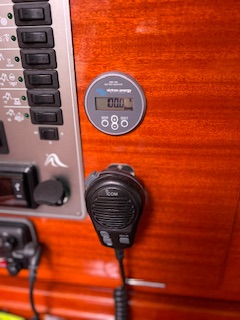 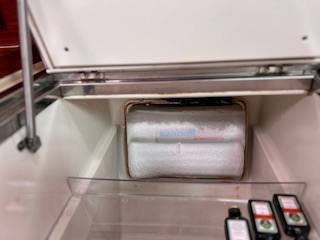    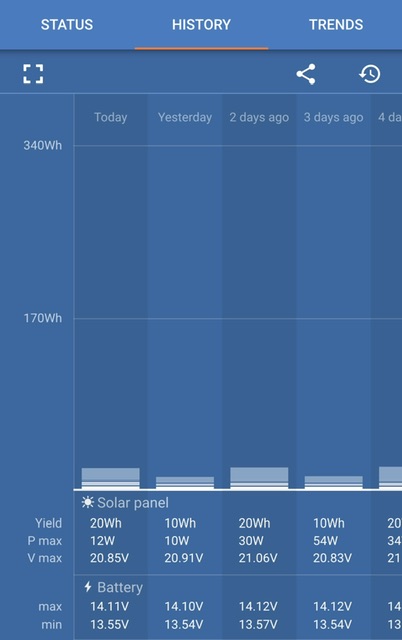 ------------- 3 Cabin, Hanse 342, Deep draft, Tiller version. |
Posted By: Issywa
Date Posted: 23 October 2024 at 05:31
|
How have you integrated your Smart BMS JK-B2A8S20P with other charging sources (ie alternator and solar)? Does your BMS communicate with your other sources such that they stop charging when you reach your desired voltage? |
Posted By: Jojo
Date Posted: 23 October 2024 at 12:35
No it’s not integrated the alternator is still setup for led battery That gives me a system that’s not charging the lithium batteries to full and not engaging the alternator when the batteries are over ca 80% The BMS limits has up today never been reached As to the solar regulator I have a slight lower max voltage than standard setup As winter is currently coming I have cut the main svisch and let it be at near 90% all winter and suspended the solar regulator in the menu (Bluetooth) In the spring I svisch on the main and enable the solar that’s all I guess this is the simplest way running lithium and maybe not the best but it works well enough for us Normally the battery is fully charged before noon no matter how low it goes at every evening whiteout starting the engine So my solar panels and regulator is working perfectly for my setup Regarding my alternator it’s temperature regulated And I don’t run my motor in idle to charge I just use it in and out of harbour What I noticed is more belt wear than running Led battery but it’s not that much of an issue Regards jonas PS batteries are sold branded LIME but they are Winston cells ------------- 3 Cabin, Hanse 342, Deep draft, Tiller version. |
Posted By: Issywa
Date Posted: 23 October 2024 at 15:43
|
Interesting as your system seems simple which seems contrary to the recommendations that one needs a full suite of “electronics wrapped in blue boxes” to control an lfp battery bank. Can you elaborate on your alternator and how it’s regulated? Does it monitor voltage output etc? I’m located in Puget Sound and it’s not uncommon for me to motor for a day to get to my destination - so I am wondering about overcharging. And the thing about lfp‘s frying the alternator. Also curious what you use to charge when on shore power. Sounds like you might not need this as your solar does this for you? My boat spends too much time on the dock and it has an older Magnum inverter/charger that I’m told is not compatible for charging lfp. I have thought about charging lfp with a cheaper (say 20 amp) unit that is capable of this. Thanks, PS before every one starts badgering me about 1. motoring - the Sound can have really light winds combined with 2 or 3+ knots of current means a really long sail to get anywhere, and 2. dock time - hoping that will change in a couple years when my wife retires although boats seem to require monetary feeding…. |
Posted By: marsella
Date Posted: 23 October 2024 at 16:07
| I went with all victron setup and have been using Victron Lynx Smart BMS which is rated at 500Amps, pretty much max that you can get out of the 12V system with the wiring as currently installed. Its paired with CerboGX via ethernet cable, therefore provides monitoring of the whole system both onsite and remotely. |
Posted By: Jojo
Date Posted: 23 October 2024 at 17:52
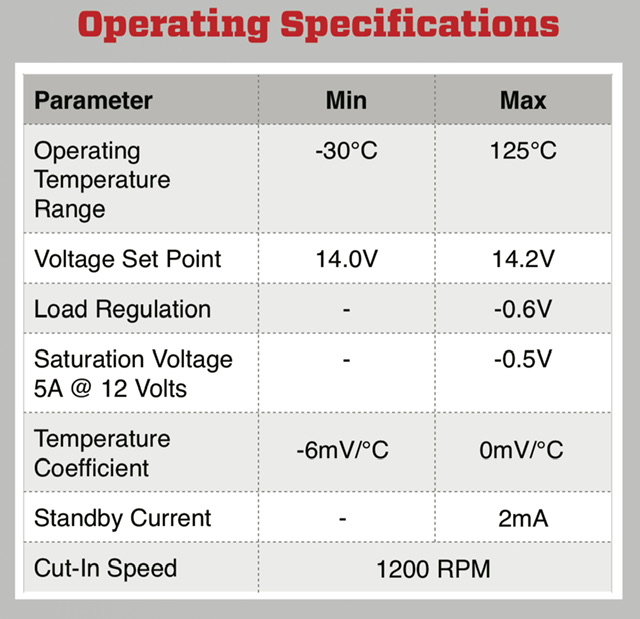 Yes this is simple Yes this is simple As my normal sailing is in Sweden’s arhepelage and seldom at marina I values that the need for additional charge is low During long day sailing instruments and autopilot work fine whiteout need for engine power to charge extra Fridge is ASU only modifications is a extra diod in serie at + to the ASU module (this keeps it from running at max cooling al time) If motoring for a night the voltage drops to 13,8 at the monitor to 13,9 from alternator only So the solar panels is what tops it up We have a dimmer on the lights in the boat (all LED) And charge mobiles and a modern laptop But that’s all
The charger is Victron bluesmart 12/30/1 Setup lithium standard program Alternator It´s a 125A Valeo altenator, there is a overheating protection built in thats will turn it of if overheated. Max 14,4 V at 20 degrees Celsius standard regulator for led battery ------------- 3 Cabin, Hanse 342, Deep draft, Tiller version. |
Posted By: Mike2145
Date Posted: 24 October 2024 at 11:32
|
Hi. I have detailed the installation in two other threads but in essence the start and bow thruster batteries are AGM and the charging for these is unchanged from factory install that is for alternator and mains charger. The Lithiums are connected to, and isolated from, this side of the system via two DC-DC chargers. These chargers present themselves to the alternator and mains charger as just another load and so there is no need for any communication. The DC-DC chargers take whatever voltage the alternator supplies and raises or lowers this to meet the charging needs of the Lithiums these have a charge profile for the lithiums and so dont communicate with the BMS. They are 'intelligent' in that they detect when the engine is not running and disconnect so that the start battery isn't discharged. This replaces the standard automatic battery combiner. The solar charger is connected direct to the Lithium bank and doesn't charge the AGMs. There is no communication needed between the solar charger and the DC-DC chargers. The BMS has no need to communicate with the other systems and is also stand alone and is only used for active balancing of the cells and detecting fault or over current conditions. There is a wiring diagram in my threads The reason for upgrading this way was to minimise the physical changes and minimise the costs. its been working well with the exception of the mains charger that cant provide sufficient current for the Lithiums with both DC-DC charges running. One is switched off when on mains. If building a system from scratch in a new boat this wouldn't be the best approach to be honest. Hope that helps.
------------- Cant take a joke, don't buy a boat. |