SD50 - Life Expectancy
Printed From: myHanse.com
Category: Hints & Tips
Forum Name: 400
Forum Description: 400 Hints, Tips and News
URL: https://www.myhanse.com/forum_posts.asp?TID=15000
Printed Date: 27 March 2026 at 03:41
Software Version: Web Wiz Forums 12.06 - https://www.webwizforums.com
Topic: SD50 - Life Expectancy
Posted By: Ratbasher
Subject: SD50 - Life Expectancy
Date Posted: 20 February 2025 at 06:56
|
Jus been informed by my mechanic that the lower gears are badly worn and that there's case-hardening of the lower leg. This is despite the SD being meticulously maintained to standards above those required by Yanmar. The propshaft was replaced last year and the gaiter the year before that together with the SD50 upgrade kit to the clutch. GL4 oil used throughout with regular oil changes. Intentions are to write-off the monies spent of maintaining the wretched thing (about £5k the past two years) and go for a new or reconditioned SD60 which I can source for about £4k plus fitting/VAT. I'm told that 17 years and 1500 hours of use is 'old' and 'very much' and that its no surprise that the leg is failing. Given the number of such legs in use that surprises me a great deal and I'd be interested in the experience of others with SD50s. Any views on if the mechanic should have been able to spot the wear given the number of times he's worked on it? If you can't take a joke - don't buy a boat! Iain 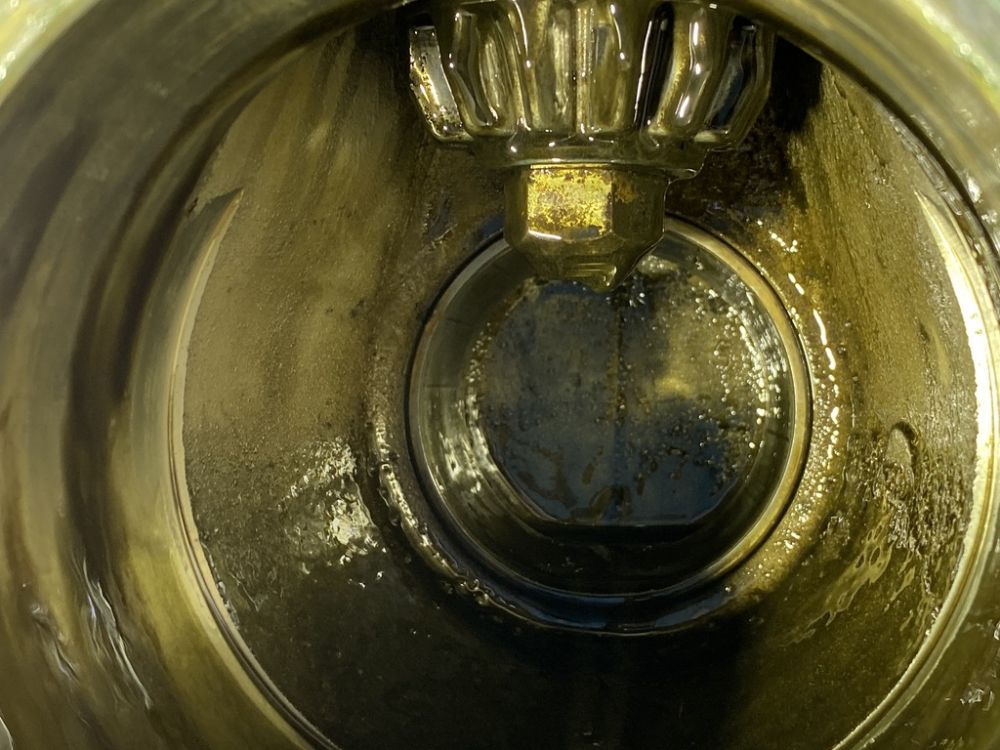 ------------- H400 (2008) 'Wight Leopard' Gosport, UK |
Replies:
Posted By: sgrhma2
Date Posted: 20 February 2025 at 09:50
|
Iain, what was the reason or fault that made you open the leg in the first place to find the case hardening on the gear (yes it’s there but it’s not that bad, I’ve seen significantly worse and run worse for a long time and still do!). 1500 hours is not old for an engine or gearbox and would equate to between 35k - 40k miles in a car. The case hardening that you appear to have occurs as longitudinal crevasses in the gear tooth face and in outboards and drive legs is usually caused by long periods of sitting at tick over or light loads. In yachts this usually occurs when the engine is left running at tick over or just above in neutral to charge batteries. Under these conditions, the drive chain can experience chatter in the transmission where the gear teeth literally bounce back and forth between gears instead of sliding smoothly across the surfaces of the teeth. If there has been gear chatter between the intermediate and output shafts, it is likely that there has also been chatter between the gears on the input and intermediate shafts. From what I can see in your photo, it’s not that bad. If it was my boat, I’d be annoyed but I would rebuild it as there is still plenty of life in it. When in use I’d make sure I didn’t leave the engine ticking over in neutral for any length of time and I’d reduce my oil change intervals. Another thing I’d do is modify the existing drain plug or find an alternative that has a magnetic insert in it (I’d be very surprised if there wasn’t a suitable one to use from an outboard or outdrive). A magnetic drain plug will catch and hold any chards or metal flakes that come off the gear teeth and minimise the risk of damage to bearings and other gear teeth. I’d also keep a lookout to find a spare leg or gear set for future use. Having said that it wouldn’t surprise me if you got years of future service out of your existing leg if you don’t send time in neutral low load situations. Iain, if you want any further info PM me Hope this was useful Simon
|
Posted By: Ratbasher
Date Posted: 20 February 2025 at 10:10
|
Simon - that is seriously valuable advice; many thanks. As I live a few thousand miles from where we keep the boat it was my Mechanic who found it. He was tasked to change the gearbox oil and investigate discolouration; the propshaft and seals had only been replaced last year and I was concerned at why the oil had slight two-tone appearance (no emulsification, however). Other than the fluctuating revs that I reported in a previous post that were traced to the fuel pump we've had no trouble or symptoms of any kind. Gears were easy to shift and there's not been any unusual noises. Since posting the original I'd been toying with the idea of delaying replacement for another season by which time we plan to be in the Clyde area. However, the Mechanic had been concerned about chards affecting the upper section so your advice about the the magnetised plug is useful in itself. Thanks also for your explanation of what the picture shows; by itself it meant nothing at all to me! Iain ------------- H400 (2008) 'Wight Leopard' Gosport, UK |
Posted By: sgrhma2
Date Posted: 20 February 2025 at 11:48
|
Iain, when you’re in the Clyde, give me a shout as I could well be not too far away. I’m based in Strangford Lough and it’s not uncommon for me to be in the Western Isles / Clyde / IoM / Wales throughout the summer. As I said earlier, I wouldn’t worry too much about your gears. I actually have a spare leg for my own boat which I picked up on eBay a few years ago for just over £200 and it’s supposed to have only 200 - 300 hours on it. It’s never been antifouled and is in amazingly good condition, so they are out there if you want to get one, you just need to take your time looking to find one. Simon
|
Posted By: jeb
Date Posted: 21 February 2025 at 12:05
Attached are pictures from 2 different SD50s, both with 1500-1800h on them. Changed main diaphragm and took the chance to replace all seals, O-rings, needle bearings and a paint job while the leg was out. Both were running perfectly fine (except one slipping cone) befor they were taken apart. I would say both looks similar to yours.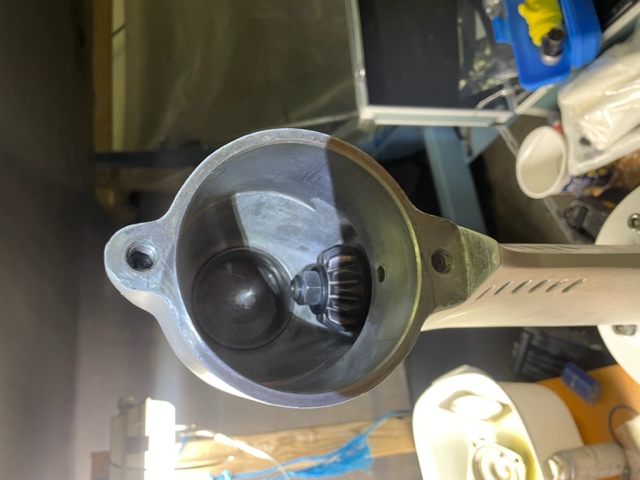 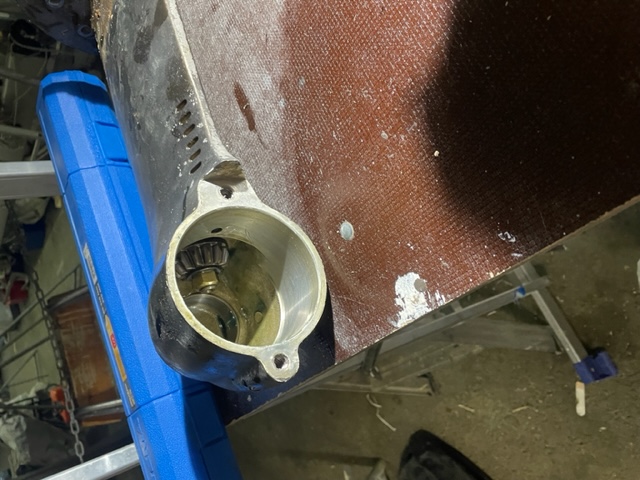
------------- Jesper Hanse 400e |
Posted By: Ratbasher
Date Posted: 21 February 2025 at 16:45
|
Thanks Jesper; that reinforces Simon's advice. Having recovered from the initial shock I'm going to have the thing put back together again and will follow that advice. I understand that Yanmar makes hose attachments that will permit the oil to be changed afloat. ------------- H400 (2008) 'Wight Leopard' Gosport, UK |
Posted By: Mark_J1
Date Posted: 24 February 2025 at 09:07
|
Iain, no trouble doing the oil change while afloat. In case it's not too obvious, just need 2 of the (reassuringly expensive) Yammer oil extract tubes in place. One at the base as normal and another at the alternative connection near the filler cap. I have the top one permanently connected to a small oil reservoir anyway. With the drive as warm as possible, put a decent oil extract pump on the lower tube. Then use a small tyre compressor to pressurise the top of the SD50 gently. It's never a quick process but I get >2L out in 10-15mins when the drive is warm. Can take 30 mins if the drive is cold but can still be done. Easy enough that I do it a couple of times a season (I do that as the GL4 is kinder to the cone clutch but I'm not as convinced of its ability to manage any small seawater ingress (versus the GL5) via the oil seals as they and the propshaft age). Best of luck with the gears. Personally, I'd also just go into a phase of refit and monitor. It's not hard to get the bottom leg open to take a look at oil seals, shaft and lower gears. Mark ------------- Hanse 400e "Grey Goose" Hull #31 |
Posted By: asimo
Date Posted: 26 March 2025 at 03:18
|
Simon, Thx for your posts. I recently dealt with oil seals etc on my SD50. Also changed prop shaft bearings, but could not get to the seat and bearing sitting behind the pinion gear in the pic you posted. Was at a loss as to how to do it without removing the vertical shaft. Grateful if you could shed some light on how to do it. Also interested in your opinion on fitting a gearbox breather using the screw opening near the gear oil filler. Im going to fit the yanmar supplied oil change barb and attach a length of 8mm PVC pipe. After reading these forums, I understood one of the reasons for oil seals failing was the induced pressure/vacuum in the gearbox caused by warming/cooling cycles. By using a breather, it means there is no adverse +/- pressure build up. Seems logical, but i say to myself, why did the designers make a completely sealed unit? Does it need pressure build up for the gear box oil to circulate? What is your opinion on this?
------------- H400e - DE HANJ0344K708 |
Posted By: sgrhma2
Date Posted: 26 March 2025 at 09:15
|
Gearboxes on cars, trucks and other land based equipment all have breathers to let the gearbox remain at ambient pressure when they are in use and hot. Without a breather, they would become pressurised when running due to internal heat build up causing the oil and air to expand, putting pressure on the seals and forcing oil to leak at any point where there is a worn seal or gasket. The situation is completely different for saildrives and outboards where the gearbox is immersed in water and they don’t have breathers. Firstly the heat build up is significantly less and consequently the pressure build up is also considerably lower so oil retention at seals and gaskets is more easily achieved. But once the seals have wear on them they do leak small amounts of oil and when the gearbox cools down after use there is also a small amount of water drawn into the gearbox which in turn causes the oil to turn milky. It is remarkable how tolerant gearboxes are to emulsified oil, but the situation needs to be addressed before it gets too bad. The reason that these marine gearboxes are sealed is for the situation when seals are starting to weep. As a sealed unit the boat is still water tight. But if there is a breather fitted, when the seals weep the boat has a leak and if left long enough the water will continue to fill the gearbox and the oil will flow out of the breather until such time as there is no oil left and water is flowing out into the boat. If the breather is fitted and raised to be above the waterline, the gearbox will still take a considerable amount of water before the fluid equilibrium has been reached. In this situation there will be an additional 250 - 500ml of water in the box. Too much for the oil to emulsify and still work which results in a lubrication failure and scraping the internal gears and bearings. To summarise, I personally wouldn’t recommend having a breather on a saildrive or outboard gearbox for the reasons outlined above. Just keep an eye on it when doing your engine checks and if the oil is a bit milky, don’t worry too much about it but take a note to change the seals at the end of the season. Hope this was useful Simon
|
Posted By: jeb
Date Posted: 26 March 2025 at 09:54
|
I do not agree with Simons rekommendation. A breather fitted above the waterline and a well filled SD will actually limit the amount of water that can get into the SD. But even better is to add a oil reservoar well above the waterline. That will put positive (small) pressure and if a leak develops push out oil saving the leg from damages. Oil level in the reservoar need to be monitored. ------------- Jesper Hanse 400e |
Posted By: sgrhma2
Date Posted: 26 March 2025 at 10:26
|
Each to their own. But if you do want to go down the breather and oil reservoir route the height of the surface of the oil in the reservoir from the propshaft would need to be approximately 1.3 times the depth of the propshaft to the waterline measurement. It’s simple maths to work out hydrostatic pressure that the seal experiences at the propshaft. Simon
|
Posted By: jeb
Date Posted: 27 March 2025 at 14:04
|
Simon is correct, the oil level of the reservoar need to be well above the waterline. Since gear oil is around 900 kg/m3 in density, the distance from prop-shaft (or where leakage can happen) to reservoar should be waterline to prop-shaft x 1/0,9 or approx 1,11, so reservoar should be 11% of the prop-shaft to waterline above the waterline. For my boat with approx 90cm from waterline to prop-shaft this translates into 10cm above waterline. Think of a 1m pipe with 1dm2 area. This will hold 100 liters. If its filled with gear oil the weight will be 90 kg. Submerged into water this oil filled pipe (assuming pipe material density is equal to oil density) will float with 10 cm sticking up, pushing away 90 liters of water witch is equal to its own weight (this is called Archimedes teori). ------------- Jesper Hanse 400e |
Posted By: asimo
Date Posted: 28 March 2025 at 00:10
|
Simon, Thank you for detailing the logic behind sealed gearboxes and in particular, for this marine application. Jesper, Thank you for your post detailing the alternative viewpoint. The engineer in me can see the benefits of both. I found a place that does seals for $10 compared to the $150 yanmar option, so my initial thoughts are to change the SD oil and shaft seals same time as engine oil and annual haul out. In the meantime, i install the breather extending to the very top of the engine compartment (0.5m above WL). I have another question. I recently purchased a Gori 3 blade folding prop to replace the fixed prop installed by previous owner. Gori weighs around 15kg. When i asked the mechanic to fit it, he said i think it is too heavy for the SD50 leg. The supplier that sold the Gori said nope, it's the right one, im wondering if anyone could shed some light on this from their own experience. ------------- H400e - DE HANJ0344K708 |
Posted By: jeb
Date Posted: 28 March 2025 at 08:21
|
Asimo, I have a Flex-O-Fold 18x13 3L on my SD 50. I can put in on the scale tomorrow and check weight, but I would guess somewhere between 10 and 15 kg. ------------- Jesper Hanse 400e |
Posted By: asimo
Date Posted: 29 March 2025 at 12:28
|
Jesper, Thanks for feedback re: the prop weight. The Gori I have is an 18x13 too. ------------- H400e - DE HANJ0344K708 |
Posted By: DJgun
Date Posted: 01 May 2025 at 00:02
|
One of the reasons gearboxes such as SD units are sealed rather than fitted with breathers is to prevent internal condensation which is extremely destructive. When a gearbox alternates hetween running and stationary with a breather, every time it cools down it draws cooler air into the gearbox and it is quite common for condensation to occur which is particularly destructive in a marine environment with salty air. When it is a sealed unit there is almost no condensation at all. Yes, there is a build up in pressure, but the effects of that are taken into account by the SD designers ( typically ZF), who have thousands of specialist desigbengineers and 100+ years of experience producing millions of gearboxes for every application imaginable including ships, planes, helicopters, military applications, yachts, automotive etc. If you choose to fit a breather then it is important to use a desiccant type, or Gortex type which prevent atmospheric moisture transfer into the saildrive. If you use a simple breather you reduce the issue of pressure build up but increase the serious issue of corrosion through water+salt increase due to condensation. Nothing kills lightly loaded case hardened gear teeth faster than corrosion. I will disclose that many years ago I was National Technical Manager for ZF in Australia, and have many decades involvement in mechanical power transmission (gearboxes) and as such have seen the effects of condensation related corrosion many times. ------------- DJ.....Sailor Ordinaire HIN DE-HANJ0331J708 |
Posted By: Mark_J1
Date Posted: 01 May 2025 at 10:12
|
Interesting DJ. Thoughts on a separate header tank, rather than a simple filter? Mark ------------- Hanse 400e "Grey Goose" Hull #31 |
Posted By: DJgun
Date Posted: 01 May 2025 at 10:52
|
Hi Mark, I don't really see much advantage in a separate header tank, as it just adds more air (if it is sealed) or more air and more condensation if fitted with a breather. Being sea water cooled on the lower leg, sail drives should not have significant temperature rise in normal operation. I haven't actually measured the SD60 on my 400e, but I will put a thermal strip on in the near future to monitor max temp in the upper housing. Gearbox overheating sometimes occurs due to aeration of oil. That happens if too high viscosity oil is used, or oil with unusual frothing, which I have Sen with one or two industrial gear oil brands. With SD50 units there is the potential overheating due to clutch slip if the clutch isn't functioning properly (a known issue). That would increase temperature in upper hosing significantly. Theoretically a small circulation pump, circulating oil from cool leg to top housing would give improved thermal capacity and consistency, by vertical circulation. One takeaway is that changing oil in the SailDrive at recommended intervals is actually important. Mineral oils can hold a small amount of water in suspension, but the best thing is change oil on regular interval to get rid of suspended water. ------------- DJ.....Sailor Ordinaire HIN DE-HANJ0331J708 |
Posted By: Ratbasher
Date Posted: 23 May 2025 at 10:04
|
Update on my original post. After 21 hours of operation this season I noted small quantities of oil had leaked down the side of the gearbox and puddled across the base. Having had a breather tube fitted as part of the upgrade kit I noted some oil had been forced out of it. There were small areas of discolouration in the oil below the dipstick (see photo). I had seen such discolouration at the end of last season (~70 hrs) and reported it to my mechanic but there had been no oil leakage visible then. Checking the oil I was surprised to see that the dipstick (old, short version) was filled to the upper line and not the lower as per the Yanmar advisory, something which I had told the mechanic about years before - although a professional firm should have been aware of this anyway. The gearbox functions correctly ahead and astern. I intend to change as much of the oil I can get out while afloat and refill to the correct level, but in the light of the posts above am unsure whether to remove the breather and re-seal the gearbox. However, having had the shaft and oil seals changed at great expense last year I'm concerned about further damage. Comments from anyone more knowledgeable than I most welcome!  ------------- H400 (2008) 'Wight Leopard' Gosport, UK |
Posted By: Mark_J1
Date Posted: 29 May 2025 at 22:05
|
Iain - as you say, that’s over filled. A fat syringe (Turkey Baster?) will let you suck some oil out easily. At a rough guess that’s about 150ml too much in there based on the replacement long dipstick. There’s great info in this thread from DJgun. I think all I can add to your decision process is that I use a breather tube that’s longer than the engine bay is high. I create a large loop in it so that there’s still plenty of expansion space. The loop retains some oil. My thinking is that limits the exposure to air. I don’t get any overspill of oil. All that said, I think I’ve now got a leaky oil seal on the input side of the gearbox. Not large but I’ll need to do it end of season. The SD50 does occasionally drive me nuts! Mark ------------- Hanse 400e "Grey Goose" Hull #31 |
Posted By: Ratbasher
Date Posted: 01 June 2025 at 08:46
|
Thanks Mark. Yes - I got a syringe large enough to frighten a horse and have adjusted the oil to the correct level with the saildrive running fine now. Dave's comments are always worth reading and I'm doing my best to take account of the advice. Unfortunately, although I've got the right adapters to change the oil afloat I can't get the screw for the discharge line out without risking damaging the slot. That's an end-of-season job I reckon but in the meantime I'll do a change when I get the boat lifted for a mid-season scrub. However, I wanted to check further into the discolouration visible on the surface and managed to extract some 800mls with the syringe and hose. It all appeared clear with only some bubbles forming after aspiration that resembled the streaks seen in the photo. Perhaps the discolouration was bubbles formed after the expanded oil in the breather tube returned to the gearbox. I'm sending a sample off to a lab anyway when I'm able. I'm thinking that boats in general are designed to drive us nuts - or occupy our minds to such an extent that we can't get into any other form of trouble. ------------- H400 (2008) 'Wight Leopard' Gosport, UK |
Posted By: DJgun
Date Posted: 01 June 2025 at 09:24
|
Hi Iain, 800ml is quite an over-fill, and would have been causing quite a lot of foaming/frothing, which makes the gearbox run significantly hotter. And create more pressure in the saildrive. Getting the sample tested is a good idea as it will show up water content well before it becomes visible to the naked eye. Maintaining the correct oil level of the right oil is 1st step to happiness. If there seems to be a problem first check is oil level. A suggestion is to take a sample soon after running the SD, and just look to see if the amount of aeration is less. Then squirt it back into the SD after visual. I can say that over 45 years involved with machanical power transmission, almost every time a client complained about gearbox temperature it was found overfilled, and often with wrong oil viscosity too. Surprisingly many tradesmen operate on the false premise that more and thicker = better, when in fact more and thicker = worse. Hopefully we will hear a nice report that your oil test is satisfactory. Cheers DJ ------------- DJ.....Sailor Ordinaire HIN DE-HANJ0331J708 |
Posted By: Ratbasher
Date Posted: 01 June 2025 at 11:04
|
Thanks very much for your advice and help, DJ - much appreciated. The 800mls I mentioned though was the total that I was able to extract via the filler cap; I was unable to open the screw for the extraction fitting so took as much as I could via the cap as I wanted to check if the discolouration persisted below the surface layer and to change as much oil as possible. The amount of the original overfill was about 150ml. I'll do as you suggest about the sampling though; thanks again. Unsurprisingly, however, I've completely lost what little faith I had in the engineers as I'd made them aware ages ago about the Yanmar advisory which they should have known about anyway. To be told that I need a new saildrive largely because "1800hrs is a huge amount for a saildrive" (nonsense) and that a new fresh water pump was needed when the cause was their underfilling of the coolant by over two litres is bordering on fraudulent, let alone incompetent. That said, I should have checked all the levels myself instead of just blindly trusting them. All the best Iain ------------- H400 (2008) 'Wight Leopard' Gosport, UK |
Posted By: DJgun
Date Posted: 02 June 2025 at 10:27
|
Hi Iain, Unfortunately we do need to check work done on our boats by others, simply because they don't have anyone else to check them before signing off. One of the biggest causes of problems is "interrupted operations" and it can strike even experienced and competent tradesmen and professionals alike. Good luck ------------- DJ.....Sailor Ordinaire HIN DE-HANJ0331J708 |
Posted By: Ratbasher
Date Posted: 09 July 2025 at 13:31
|
Just for completeness if anyone's researching this topic in the future, I've had confirmation from Gideon Coetzee, the developer of the Upgrade kit, that although the kit comes with a breather tube the upgraded clutch will work just as well in a sealed gearbox. I thought that would be the case but checking usually beats assuming.... If anyone is considering fitting the upgrade kit, I've found Gideon to be most helpful and quick to respond to any query. Iain ------------- H400 (2008) 'Wight Leopard' Gosport, UK |